
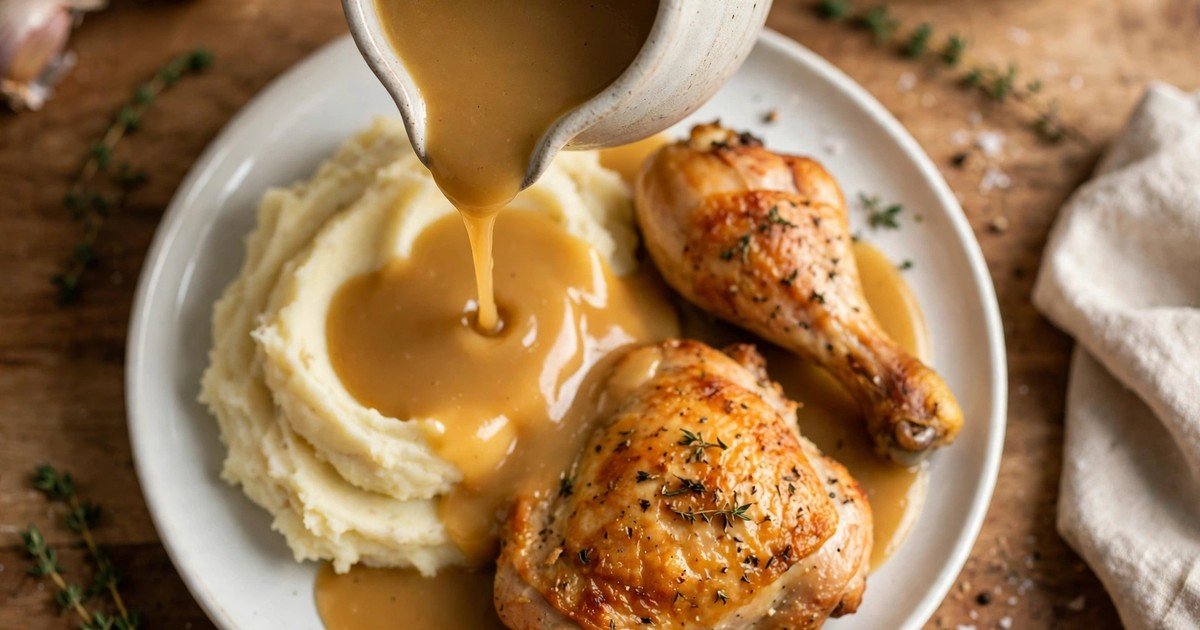
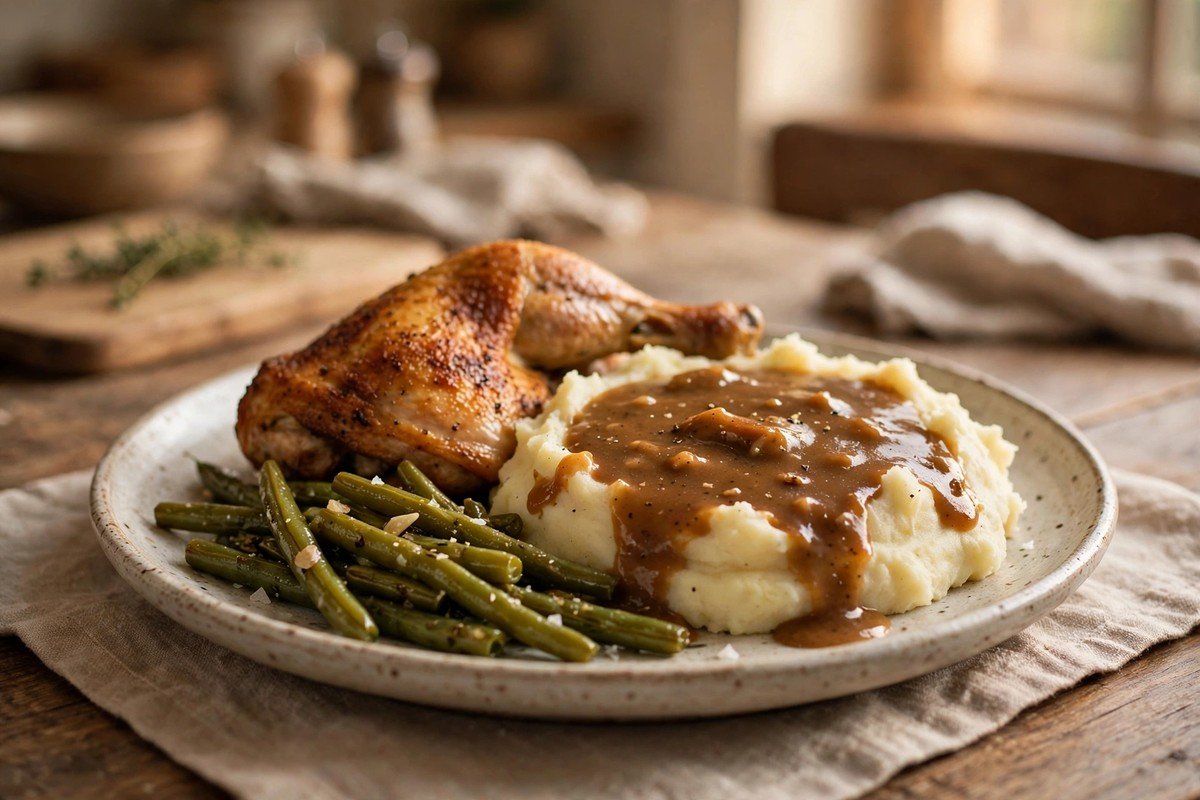
Chicken gravy is a smooth, savoury sauce made from butter, flour and chicken stock. You cook butter and flour into a roux, then whisk in warm stock a little at a time until it turns thick and glossy. It takes about 30 minutes and serves 6 people. It works with or without chicken drippings. Pour it over mashed potatoes, roast chicken, biscuits or rice.
TL;DR
- Base: butter, flour and chicken stock, cooked into a smooth roux.
- Method: whisk in warm stock a little at a time so it stays lump free.
- Time: about 30 minutes from start to finish.
- Serves: 6 people.
- Works with or without chicken drippings.
- Best with: mashed potatoes, roast chicken, biscuits and rice.
- If it goes lumpy: whisk it hard or strain it and it will come back smooth.
- Make ahead: it keeps well and reheats on low heat.
What Is Chicken Gravy?
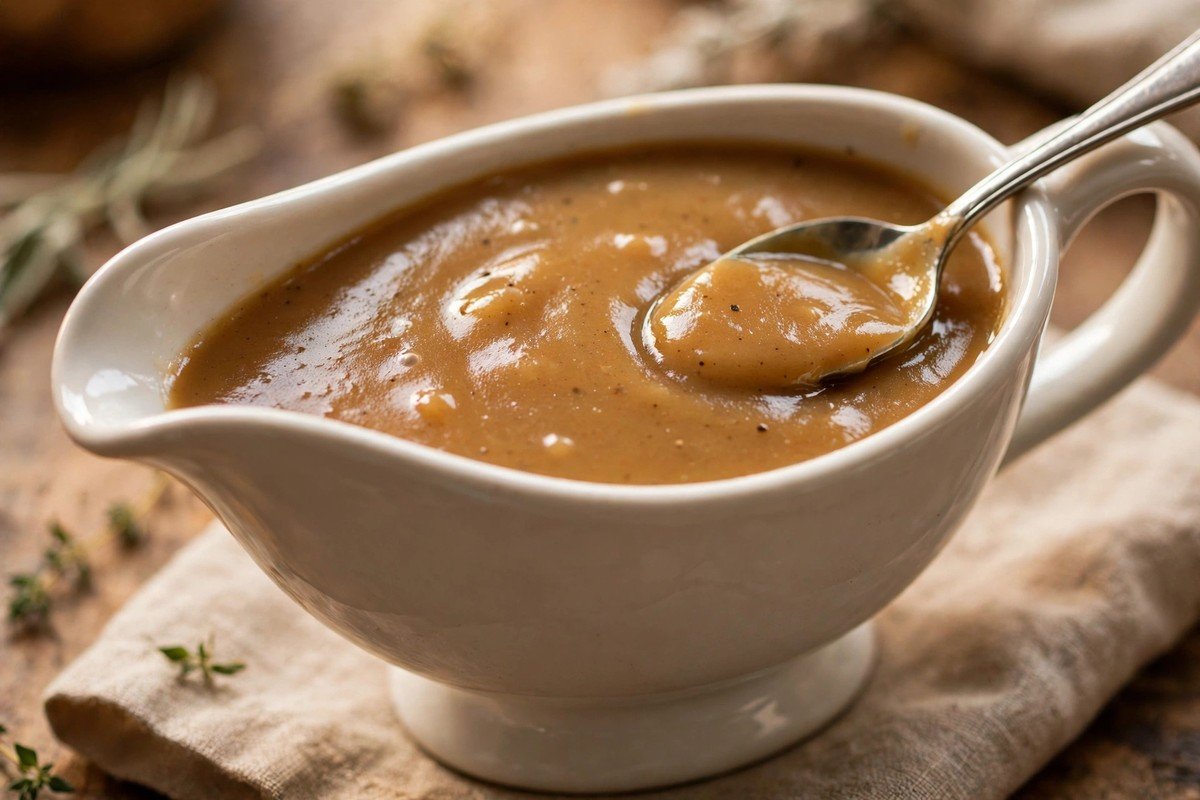
Chicken gravy is a warm sauce that turns plain chicken and potatoes into a proper meal. It is rich, salty and smooth, with a soft chicken flavour and a light golden colour. A good gravy coats a spoon and pours in a slow, steady stream. It should not be watery, and it should not be so thick that it sits in a lump on the plate.
This is not a curry gravy, and it is not a packet mix. The gravy in this recipe is the classic American style sauce you see over roast chicken, fried chicken and mashed potatoes. It starts with a roux, which is just butter and flour cooked together in a pan. That roux gives the gravy its body and its smooth feel. Then you add chicken stock, and the sauce thickens as it simmers.
The best chicken gravy recipe is simple on purpose. It uses a few pantry items, and it does not need cream, wine or a long list of herbs. You can add cream at the end if you want a richer sauce, but the base recipe stands on its own. Once you learn the base, you can make it again and again, and you can fix it fast if it goes wrong.
People often think gravy is hard because they have seen lumpy gravy, or gravy that tastes like raw flour. Both problems are easy to avoid. Cook the flour long enough, add the stock slowly, and whisk all the time. That is the whole secret.
Why Homemade Beats a Packet
A packet of gravy mix is fast, but it tastes flat and salty, and you cannot control what goes in it. Homemade chicken gravy tastes fresher because you use real stock, real butter and fresh pepper. You can make it as salty or as mild as you like, and you can make it thick or thin to suit the meal.
Homemade gravy also uses what you already have. If you roast a chicken, you have drippings in the pan. Those drippings are pure flavour, and they make the best gravy of all. If you have no drippings, you can still make a great gravy with good chicken stock from a carton. The method is the same, and the result is still much better than a packet.
Cost is another reason to make it at home. Butter, flour and stock cost very little, and one batch serves six people. In the same time it takes to make a packet, you can make the real thing, and you will know exactly what is in it.
If you want a sticky chicken dinner to pour this gravy over, try our Bourbon Chicken.
Ingredients You Need
This chicken gravy recipe serves 6 people, with about one third of a cup each. That is enough to cover mashed potatoes and chicken with a good spoonful left over. You can double the recipe for a crowd, but use a wide pan so you can whisk it well.
For the Gravy
You need 4 tablespoons of unsalted butter, 4 tablespoons of all purpose flour, and 2 cups of chicken stock or chicken broth. Use low sodium stock if you can, so you can add salt to taste at the end. If you only have regular stock, use it, but taste before you add any salt.
You also need half a teaspoon of salt, half a teaspoon of black pepper, and a pinch of white pepper if you have it. White pepper adds a gentle warmth without black specks in the sauce. A pinch of garlic powder is optional. For a richer gravy, use 2 to 3 tablespoons of heavy cream at the end.
If you have chicken drippings, use them too. Save 2 to 3 tablespoons of the fat and juices from the roasting pan. You can use the fat in place of some of the butter, and stir the juices into the stock. This is the best chicken gravy recipe when you have a roast in the oven, because the drippings add a deep roasted flavour that stock alone cannot match.
What Each Ingredient Does
Butter gives the gravy its rich taste and its smooth feel. It also cooks the flour and stops it from tasting raw. Flour is the thickener. It soaks up the butter, then swells as you add stock, and that is what turns thin liquid into gravy. Stock gives the flavour, so use the best stock you have. Salt and pepper are for balance. Add them at the end, a little at a time, and taste as you go.
Warm the stock until it is warm to the touch, not boiling. Warm stock mixes into the roux more smoothly than cold stock, and it thickens faster. Keep about half a cup of extra stock nearby, in case the gravy gets too thick.
Chicken Gravy at a Glance
| Item | Detail |
|---|---|
| Prep time | 5 minutes |
| Cook time | 20 to 25 minutes |
| Total time | 30 minutes |
| Serves | 6 people |
| Main method | Butter and flour roux, then warm chicken stock |
| With drippings | Yes, use 2 to 3 tablespoons if you have them |
| Without drippings | Yes, use stock only, it still works well |
| Best served with | Mashed potatoes, roast chicken, biscuits, rice |
| Leftovers | Keeps 3 to 4 days in the fridge, freezes well |
How to Make Chicken Gravy
Read the steps once before you start. Then get your pan ready, warm the stock, and cook. You will not need to stop and search for an ingredient in the middle of cooking.
Step 1: Warm the Stock
Pour 2 cups of chicken stock into a small pan or a jug. Warm it over low heat, or in the microwave, until it is warm to the touch. It does not need to boil. Warm stock is the key to a smooth gravy. Cold stock can shock the hot roux and make lumps.
If you have chicken drippings, pour them into a jug and let the fat rise to the top. Spoon off 2 to 3 tablespoons of fat and set it aside. Keep the juices below the fat too, and stir them into the warm stock.
Step 2: Melt the Butter and Make the Roux
Put a medium saucepan over medium low heat. Add 4 tablespoons of unsalted butter. If you are using chicken fat from drippings, use 2 tablespoons of butter and 2 tablespoons of fat. Let the butter melt slowly. It should foam a little, but it should not brown or burn.
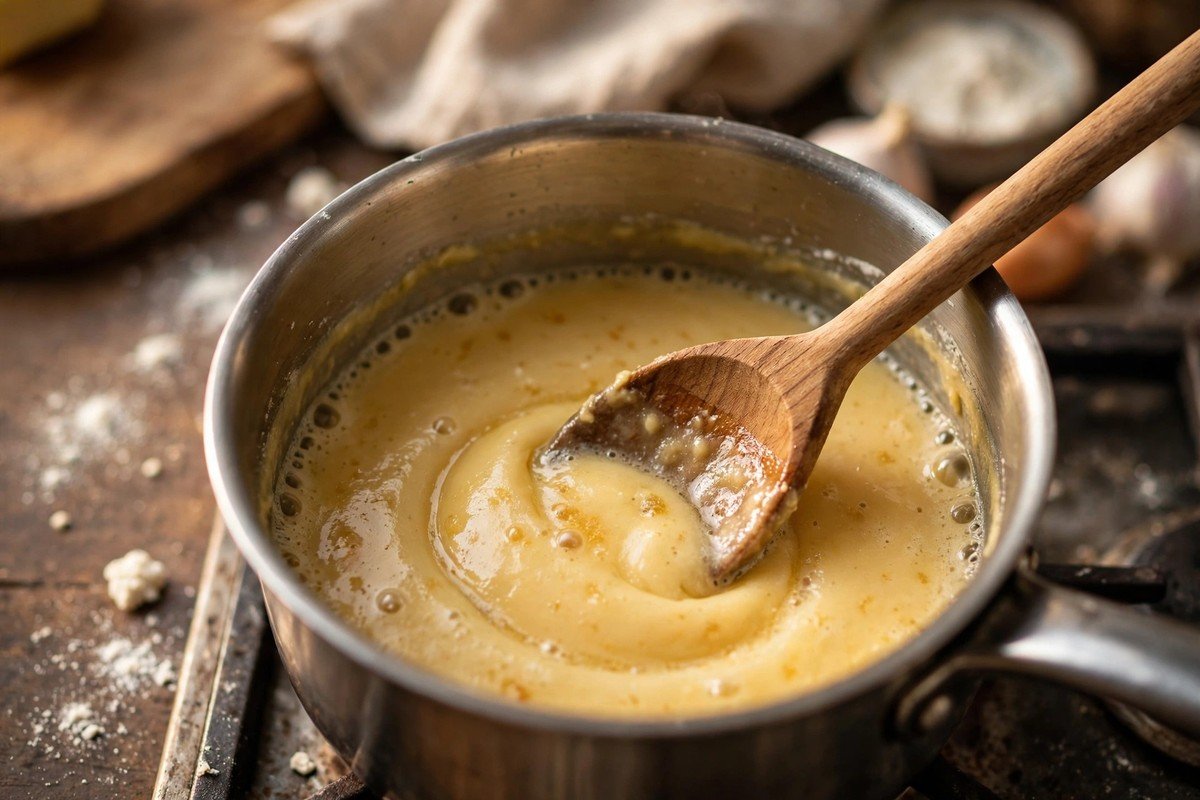
Sprinkle 4 tablespoons of flour over the melted butter. Whisk at once. The mix will look like a thick paste. Keep whisking for 6 to 8 minutes over medium low heat. The roux will turn from pale white to a light golden colour, and it will smell like a cooked pie crust. That smell tells you the flour is cooked. Do not rush this step. Raw flour makes gravy taste chalky.
Step 3: Add the Stock a Little at a Time
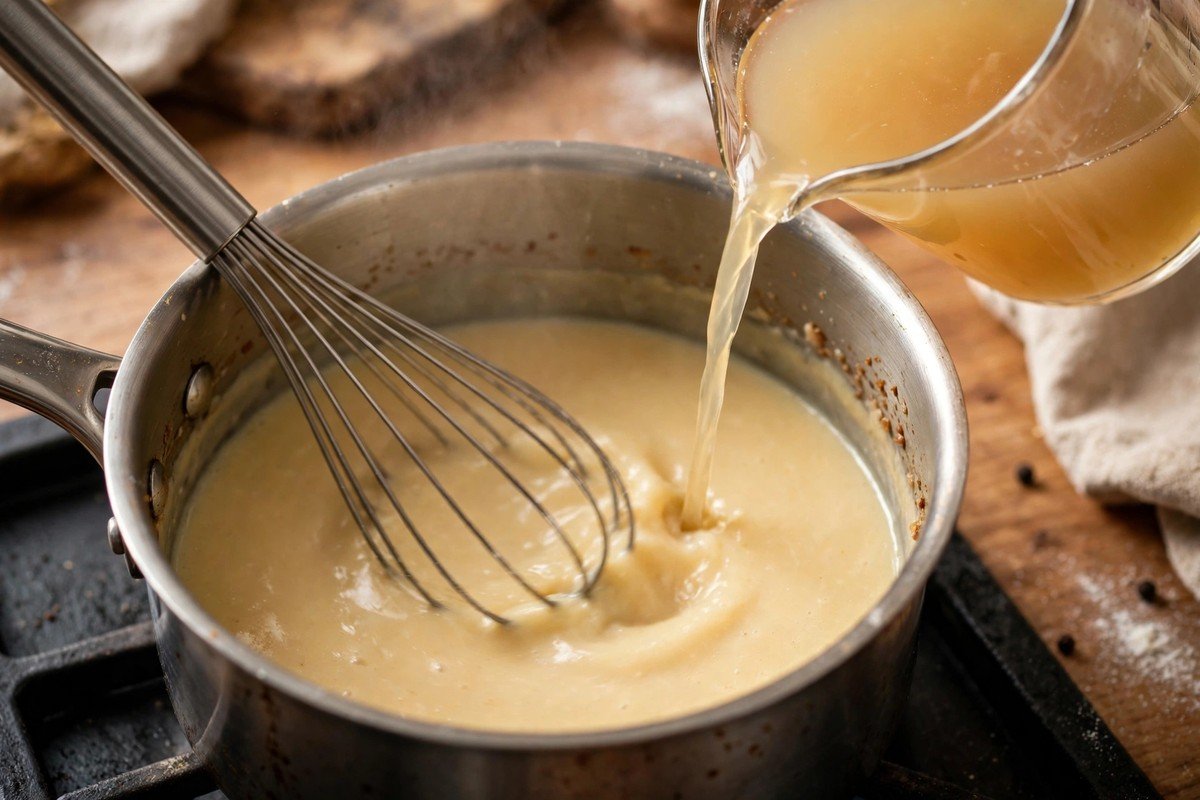
Take the pan off the heat for a moment. Pour in about half a cup of warm stock, and whisk hard. The roux will seize up and look lumpy at first. That is normal. Keep whisking, and it will smooth out into a thick paste. Add another half cup of stock, and whisk again until smooth. Repeat until all 2 cups of stock are in the pan.
Adding the stock slowly is the main trick for a lump free gravy. If you pour it all in at once, the flour cannot mix in evenly, and you will get lumps. A whisk is faster than a spoon, and it breaks up small lumps as you go.
Step 4: Simmer Until Thick
Put the pan back over medium heat. Stir often, and let the gravy come to a gentle simmer. It will bubble softly around the edges. Cook for 8 to 10 minutes, stirring every minute so it does not stick to the bottom.
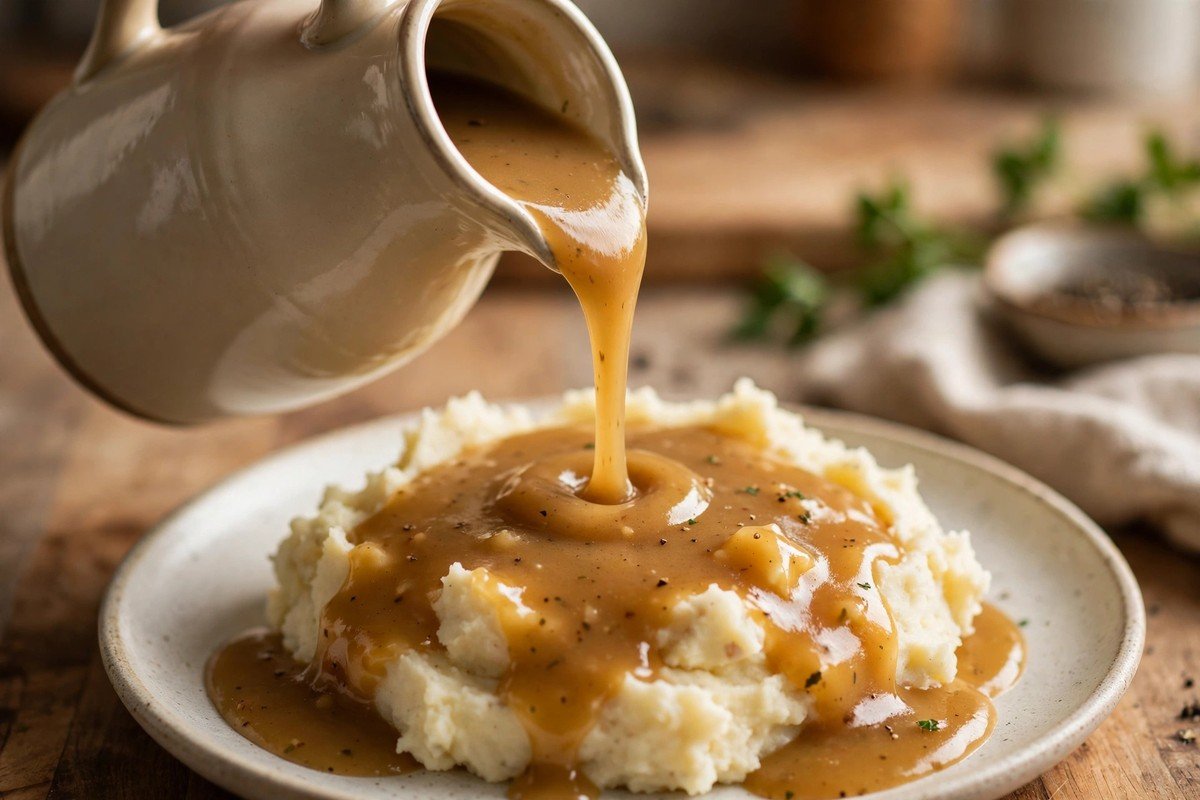
Test it by dipping a spoon in and lifting it out. The gravy should coat the back of the spoon in a thin, even layer. When you run a finger across the spoon, the line should stay clear. If the gravy runs off like water, cook it a few minutes longer. If it sticks in a thick coat, it is ready.
Step 5: Season and Finish
Turn the heat down to low. Taste the gravy. Add half a teaspoon of salt and half a teaspoon of black pepper, a little at a time. Stir and taste again. If you used low sodium stock, you may need a little more salt. If you used drippings, you may need very little salt at all, because drippings are already salty.
If you want a richer gravy, stir in 2 to 3 tablespoons of heavy cream now. The cream will make the colour a little paler and the taste a little softer. It is optional, and the gravy is good without it.
Pour the gravy into a jug or a gravy boat and serve it hot. If you are not serving it straight away, keep it warm over very low heat, and stir it now and then. A skin can form on top if it sits still for too long, so a quick stir will keep it smooth.
For a crisp chicken to serve with this gravy, try our Chicken Tender Recipe.
How to Get a Smooth, Lump Free Gravy
- Warm the stock first. Cold stock hits hot roux and makes the flour clump.
- Add the stock slowly. Pour in half a cup, whisk until smooth, then add more.
- Whisk all the time while you add stock and while the gravy simmers.
- Cook the roux until golden, about 6 to 8 minutes, so it does not taste raw.
- Strain it if you need to. Pour it through a fine sieve into a clean pan, and the lumps stay behind. This is not a failure. Even good cooks strain gravy when they want it perfect.
- If the gravy is too thin, mix 1 teaspoon of cornstarch with 1 tablespoon of cold water, stir it in, and wait 30 seconds. Repeat if you need to, a little at a time.
- If the gravy is too thick, add warm stock a spoon at a time and stir. Taste it again, because adding stock can dull the salt a little.
Common Mistakes to Avoid
- Using cold stock. Warm the stock first, and the sauce will mix in smoothly.
- Pouring in all the stock at once. Add it in small amounts, and whisk between each addition.
- Not cooking the flour long enough. Cook the roux until golden and nutty smelling, or the gravy will taste like raw flour.
- Cooking on high heat. High heat makes the sauce stick and burn. Use medium heat and stir often.
- Adding salt too early. Stock and drippings are already salty, and the gravy gets saltier as it simmers. Taste at the end, and add salt a little at a time.
If you want a spicy chicken dinner to go with this mild gravy, try our Easy Jerk Chicken Recipe.
Roux or Cornstarch: Which Thickener Is Best?
| Thickener | How it works | Best for | Watch out for |
|---|---|---|---|
| Flour roux | Butter and flour cooked together, then stock added | Classic gravy, rich flavour, golden colour | Needs slow stock and good whisking, or it lumps |
| Cornstarch slurry | Cornstarch mixed with cold water, stirred into hot stock | Quick fix, clear glossy sauce, gluten free | Can turn thin again if cooked too long |
| Drippings and flour | Flour stirred into pan fat, then stock added | Roast chicken gravy, deep flavour | Fat can be salty, so taste before adding salt |
For this recipe, use the flour roux as the main method. It gives the best flavour and the best colour. Keep a cornstarch slurry ready as a fix, not as the main thickener. If the gravy is too thin at the end, a little slurry will save it in 30 seconds.
Easy Swaps
| If you do not have | Use this instead | What changes |
|---|---|---|
| Unsalted butter | Salted butter | Use less added salt, taste at the end |
| Chicken stock | Chicken broth | A little lighter, still good |
| Chicken drippings | Extra stock | Less roasted flavour, still smooth |
| Heavy cream | Milk or no cream | Lighter gravy, a little less rich |
| All purpose flour | Gluten free flour blend | Similar thickening, cook the roux a little longer |
| Black pepper | White pepper | Milder heat, no black specks |
| Garlic powder | One minced garlic clove | Fresher taste, cook it in the butter first |
Do not swap more than two things at once if you are making this recipe for the first time. Change one thing, taste it, and learn how it works.
For a warm, cosy chicken dinner, try our Chicken Gnocchi Soup.
What to Serve With Chicken Gravy
Chicken gravy is rich and savoury, so it needs simple foods that soak it up. Mashed potatoes are the classic choice, and they are the best one. Roast chicken is the next best choice, with the gravy poured over the sliced meat. A fresh side also helps. Steamed green beans, peas or carrots add colour and a little sweetness next to the salty gravy.
| Serve it with | Why it works | How to make it simple |
|---|---|---|
| Mashed potatoes | Soaks up the sauce and turns soft and rich | Mash with butter and a splash of milk |
| Roast chicken | Classic pair, gravy keeps the meat moist | Slice the chicken and spoon gravy over it |
| Biscuits | Warm and soft, perfect for mopping up gravy | Bake while the gravy simmers |
| Steamed rice | Simple and light, soaks up sauce well | Cook rice while you make the gravy |
| Fried chicken | Crisp outside, gravy adds moisture | Serve gravy on the side, so the crust stays crisp |
| Stuffing | Soft and savoury, made for gravy | Bake stuffing and spoon gravy over it |
For another comfort food dinner, try our Easy Chicken Fried Steak Recipe.
If you are serving a crowd, make a double batch and keep it warm in a pan on low heat, with a lid on, and stir it now and then. Put the gravy in a jug on the table, so people can pour as much as they like.
How to Store and Reheat Chicken Gravy
Let the gravy cool to room temperature before you store it. Do not leave it out for more than 2 hours. Pour it into an airtight container, and press a piece of cling film right onto the surface. This stops a skin from forming on top. Store it in the fridge for 3 to 4 days.
To reheat, put the gravy in a small pan over low heat and stir it often. It will look thick and a little solid when cold, and that is normal. As it warms, it will loosen. Add a spoon of warm stock or water if it looks too thick. Heat it for 4 to 5 minutes, until it is hot all the way through. Taste it again, and add a pinch of salt or pepper if it needs it.
You can freeze chicken gravy for up to 3 months. Pour it into a freezer safe container or bag, leave a little space at the top, and label it with the date. Thaw it in the fridge overnight, then reheat it in a pan as above. Whisk it hard as it warms. If it looks thin after freezing, add a small cornstarch slurry. Add cream fresh when you reheat it, not before freezing, because cream can split when frozen.
If you want a make ahead dinner for a busy week, try our Chicken Casserole Recipe.
Frequently Asked Questions
Can I make chicken gravy without drippings?
Yes. Use butter and flour to make a roux, then whisk in warm chicken stock. Drippings add extra roasted flavour, but they are not needed. Use good stock, cook the roux until golden, and season at the end, and the gravy will still taste rich.
Why is my chicken gravy lumpy?
Lumpy gravy usually means the stock was cold, or it was poured in too fast, or the roux was not whisked enough. Whisk it hard for a minute, then pour it through a fine sieve into a clean pan. Next time, warm the stock first and add it a little at a time.
Why does my gravy taste like flour?
That means the roux was not cooked long enough. Flour needs 6 to 8 minutes in hot butter to lose its raw taste. Cook it until it turns light golden and smells like a cooked pie crust. If the gravy already tastes like flour, simmer it for a few more minutes and add a pinch of salt and pepper.
How do I make chicken gravy thicker?
Simmer it a little longer, and it will thicken as water cooks off. If it is still too thin, mix 1 teaspoon of cornstarch with 1 tablespoon of cold water, stir it into the simmering gravy, and wait 30 seconds. Repeat if you need to, a little at a time. Do not add dry flour to hot gravy, or it will form lumps.
How do I make chicken gravy thinner?
Add warm stock a spoon at a time and stir. Do not add cold water if you can help it, because it can make the sauce grainy. Taste it again after you thin it, because adding stock can dull the salt a little.
Can I make chicken gravy ahead of time?
Yes. You can make it a day ahead, cool it, and store it in the fridge. Press cling film onto the surface to stop a skin from forming. Reheat it in a pan over low heat, whisk it smooth, and add a spoon of warm stock if it is too thick.
Can I freeze chicken gravy?
Yes, for up to 3 months. Cool it first, then freeze it in a container or a bag. Thaw it in the fridge overnight, then reheat it in a pan over low heat. Whisk it hard as it warms. If it looks thin after freezing, add a small cornstarch slurry. Add cream fresh when you reheat it, not before freezing.
Final Words
Chicken gravy is one of those sauces that looks simple but makes a whole meal better. It is fast, it uses simple food, and it fills the kitchen with a warm, savoury smell that makes everyone hungry. You do not need special tools or hard to find ingredients. You need a pan, butter, flour, good stock and 30 minutes.
Make it once with the recipe above, taste it, and fix the salt or the thickness to suit your family. Then make it again. The second time will be faster, and you will know exactly how you like it. Serve it over mashed potatoes, with roast chicken, and enjoy a sauce that tastes like it came from a good home kitchen, because it did.

Maryam
SEO content writer and recipe obsessive. Two years writing for the web, and a kitchen that mostly smells of chicken and garlic. Every recipe here is cooked and timed before it is published.